Shogi: chess where captured pieces come back
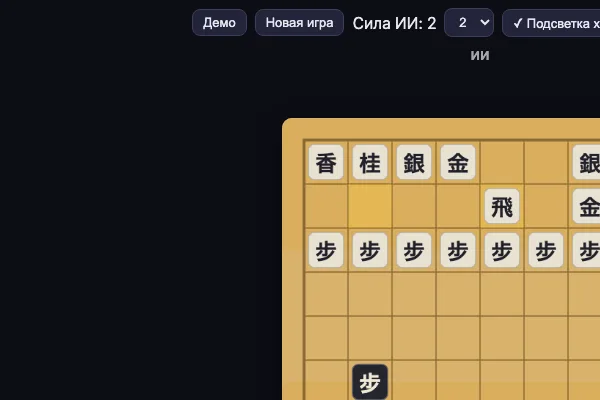
One rule separates shogi from western chess, and it changes everything: a captured piece is not removed from the game. It goes into your hand, and on any later turn you may drop it back onto the board as your own.
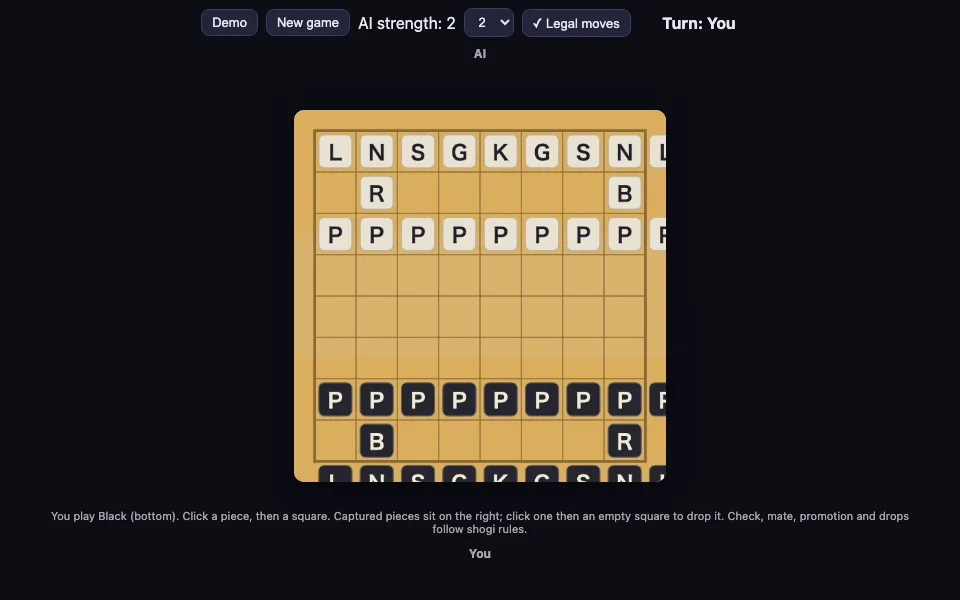
Why the game never simplifies
In chess, trading pieces reduces the material on the board, and the endgame is a thinner, calmer position. In shogi, trading transfers material — it does not remove it. Every capture arms your opponent. A rook you take is a rook they can drop behind your lines twenty moves later.
The consequence is that shogi has no quiet phase. The board stays crowded, threats keep arriving from empty squares, and "simplifying to a won endgame" is not a plan that exists here.
Promotion works differently too
Cross into the opponent's camp and pieces promote: a pawn becomes a gold general, a bishop becomes a dragon horse, a rook becomes a dragon king. Promotion is broad and cheap compared with chess, so advancing is not just an attack, it is an upgrade — and holding a rank near your own camp is not automatically safe.
Practical advice for a first game
- Value pawns properly. In shogi a pawn in hand is a real weapon: dropped in front of an enemy formation it breaks the shape.
- Think about what you are handing over before you capture. Sometimes leaving a piece alone is better than taking it and arming the opponent.
- Drops cannot be blocked in advance. Guard the squares in front of your king rather than hunting the piece that threatens it.
- Turn on legal-move highlighting for the first games — the piece movements are unfamiliar and the wedge shapes are hard to read at first.
- Start the AI slider low. Shogi engines are strong, and losing without understanding why teaches nothing.
You play Black from the bottom. Check, mate, promotion and perpetual-check rules are all enforced, so what you learn here transfers to a real board.