Nurikabe: Sea Fill — the puzzle of islands and water
Japan on a sheet of grid paper
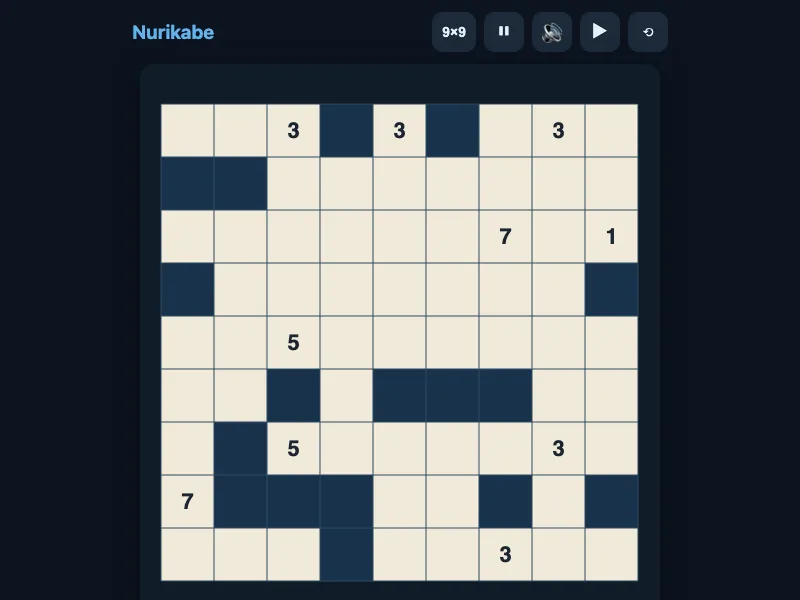
Nurikabe wears a painterly name: in folklore it is a wall spirit that swells between fishermen and their homes. On the board you get a white field with sparse numbers. The task: decide where every island ends and the sea begins.
Three rules
1. Island = clue: each region of white cells holds exactly one number, and that number equals the island's size.
2. The sea is one body: all sea cells connect into a single shape — no two separate "lakes".
3. No 2×2 pools: nowhere on the board may a two-by-two square of sea cells remain.
How to think
Start with the big numbers: a clue of 4 instantly claims its four cells, and the sea hugs lone islands from every side. Then sea law takes over: two lakes are forbidden, so contested cells are often flooded into connectivity. The 2×2 ban is the subtlest tool of all — cells that want to become sea sometimes must stay land.
Click to flood, click again to restore land. Mistakes heal in one click.
Why it hooks you
Nurikabe offers a rare kind of pleasure: first you fill in the obvious, then you notice the board itself "asks" for certain answers — connectivity and the 2×2 ban drive every grid to a single solution. 7×7 takes minutes, 9×9 takes an evening. Every board is generated fresh, solvability is guaranteed, and the demo mode shows the final flood.