Sudoku games — classic and variants
Sudoku rests on one rule — every row, column and 3×3 box holds the digits 1 to 9 exactly once — and all eight games here keep it. What changes is what the grid does not give you: fewer givens, or sums, thermometers and diagonals instead of digits.
The order runs from simple to hard. The first two take five to fifteen minutes: the classic and a 6×6 mini. After that come variants with almost no givens, where every digit has to be proved: cage sums, strictly increasing thermometers, cells that accept only even or only odd digits. Every variant runs in the browser with nothing to install.
All games of this genre: Puzzle games
8 games
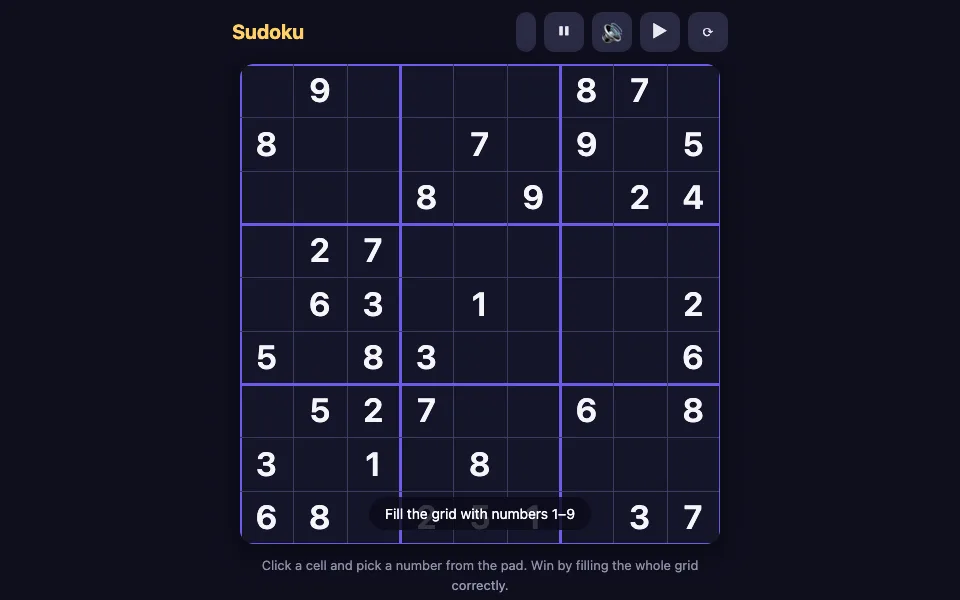
Sudoku
The plain 9×9: rows, columns and boxes, nothing else.
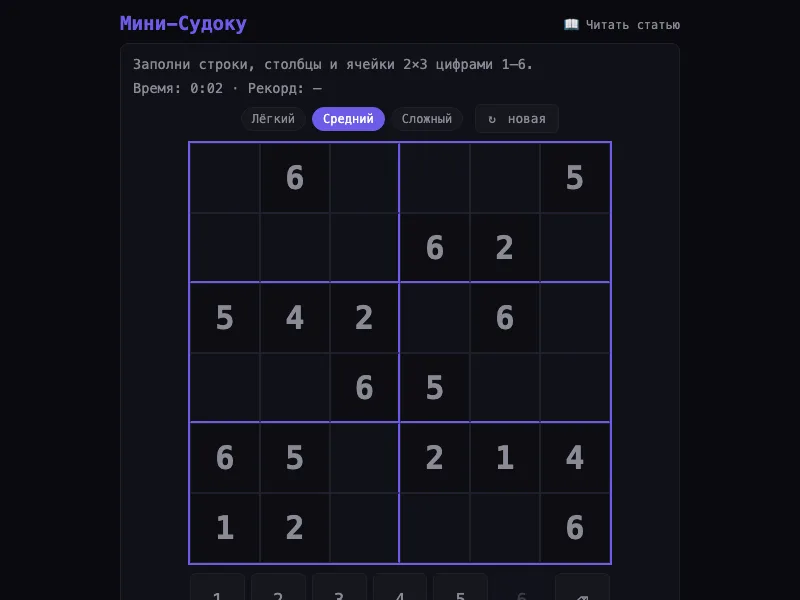
Mini Sudoku
A 6×6 grid: a five-minute round instead of half an hour.
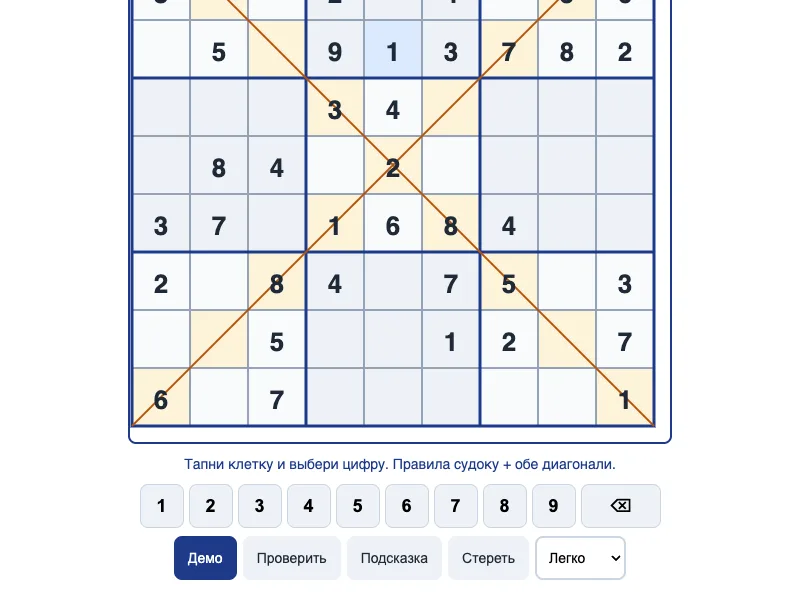
Sudoku X
Plus an X: both main diagonals must hold 1–9 too.
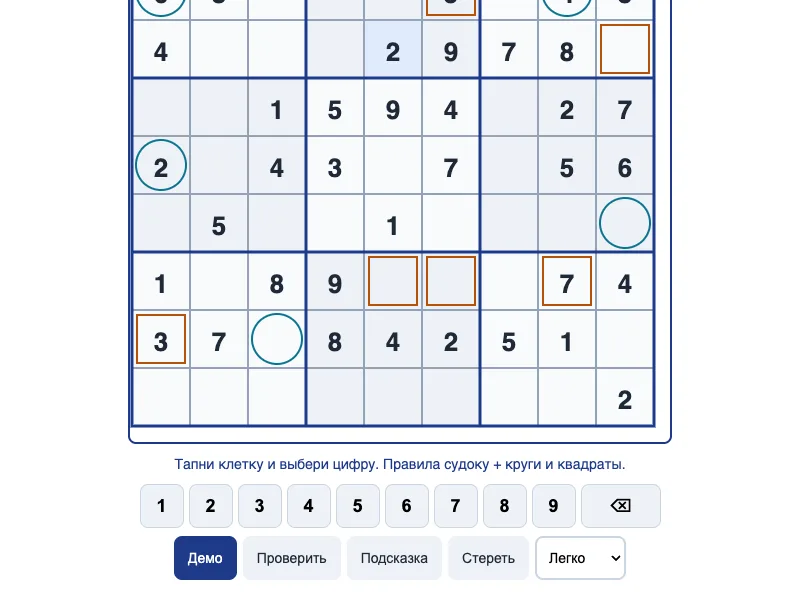
Odd-Even Sudoku
Circled cells take even digits, squared cells odd ones.

Killer Sudoku
Cages with sums replace most givens: arithmetic plus logic.
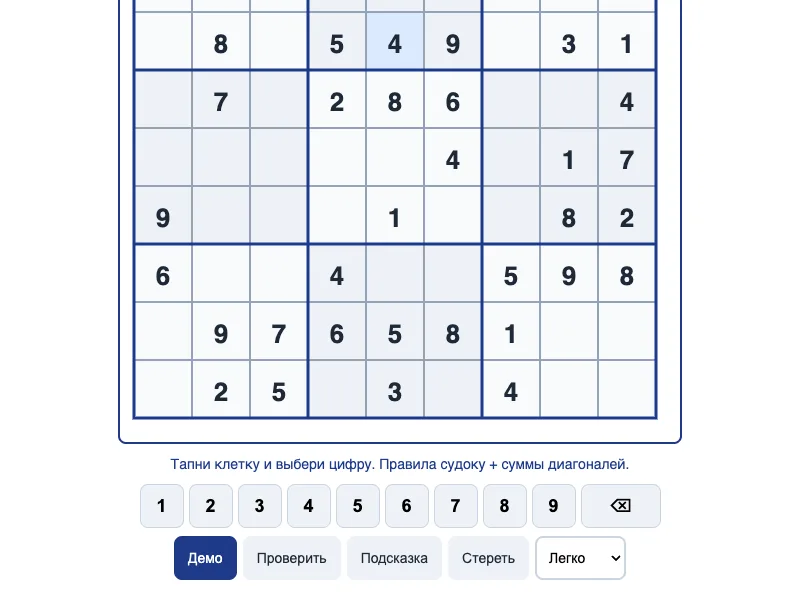
Little Killer Sudoku
Sums sit on the edge and read along the diagonals.

Thermo Sudoku
Thermometers: digits strictly increase along each one.
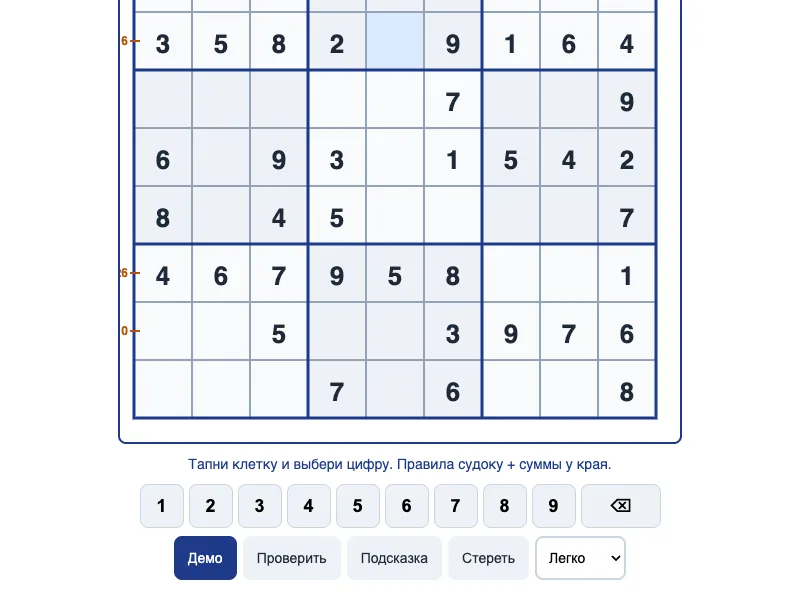
X-Sums Sudoku
An edge number sums the first X cells of that line.
Questions and answers
Can sudoku be solved without guessing?
In the classic and the mini, yes — logic is enough. Sum and thermometer variants sometimes need a short trial, but the grids are built to keep it short.
Is this the same sudoku or different games?
One rule, different constraints: some add diagonals, some remove givens. Once you can play the classic, you can play any of them.
How long does a round take?
The 6×6 mini is about five minutes; the classic 9×9 runs from fifteen to thirty. Progress is not saved: every grid starts fresh.
Does the game check my mistakes?
A conflicting digit is usually highlighted as soon as it lands in a row or column. There is no "show the answer" button — that would leave nothing to solve.